
Power Your Home with Smart Solar Energy
Clean Energy Solutions for Modern Homes
Switching to rooftop solar is one of the smartest investments homeowners can make today. At SouthIndia Solar, we help families generate their own electricity using advanced solar panel technology installed directly on their rooftops. By capturing sunlight and converting it into usable electricity, homeowners can reduce power costs while contributing to a cleaner environment.
Our residential solar systems are designed to deliver reliable performance, long-term savings, and energy independence for homes across Vijayawada and surrounding areas.
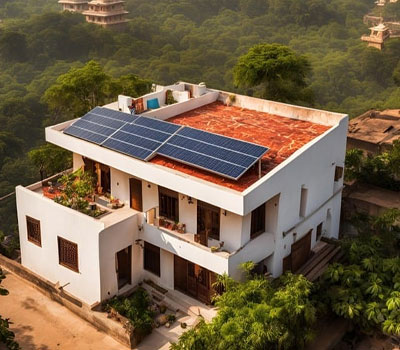
How Our Rooftop Solar Systems Work
Solar rooftop systems convert sunlight into electricity using high-efficiency photovoltaic panels installed on your roof.
1️⃣ Solar Panels Capture Sunlight
Special photovoltaic cells absorb sunlight and generate direct current (DC) electricity.
2️⃣ Inverter Converts Power
A solar inverter converts DC electricity into alternating current (AC), which is used by household appliances.
3️⃣ Electricity Powers Your Home
The generated power runs your lights, fans, appliances, and other electrical devices.
4️⃣ Extra Power Goes to the Grid
If your system generates more electricity than you use, the surplus energy can be exported to the grid through net metering, helping you reduce electricity bills further.
Why Choose Rooftop Solar for Your Home?
Installing a rooftop solar system offers multiple benefits for homeowners:
- Significant Electricity Savings
- Reduce your monthly electricity bills by generating your own clean power from the sun.
- Environmentally Friendly Energy
- Solar power produces zero emissions and helps reduce dependence on fossil fuels.
- Long-Term Investment
- Solar systems typically last 20–25 years, making them a reliable long-term energy solution.
- Government Incentives
- Homeowners may benefit from government subsidies and net-metering policies that make solar installation more affordable.
- Energy Independence
- Generate your own electricity and reduce reliance on rising utility prices.
Different Types of Residential Solar Power Systems
Home solar installations are designed in different configurations depending on electricity needs, location, and backup requirements. The most common residential solar systems include the following:
Hybrid Solar Power System
A combination of grid-connected and battery-based systems.
Stores excess solar power in batteries for backup during outages.
Automatically switches between solar power, batteries, and the grid when required.
Ideal for homeowners who want both savings and power backup.
Grid-Connected Solar System
Directly connected to the local electricity grid.
Solar panels generate electricity during the day to power your home.
Any extra electricity produced can be exported to the grid through net-metering policies.
One of the most economical solar solutions for urban homes.
Standalone Solar System
Operates completely independent of the electricity grid.
Uses battery storage to supply power during nighttime or low sunlight conditions.
Suitable for rural locations or areas with unreliable electricity supply.
Ensures continuous power availability without depending on the utility grid.
Essential Parts of a Residential Solar Installation
A residential solar energy system consists of several key components that work together to generate and manage electricity efficiently.
Solar Photovoltaic Panels
Capture sunlight and convert it into direct current (DC) electricity.
Solar Inverter
Transforms DC electricity into alternating current (AC) used by household appliances.
Solar Battery
Stores surplus electricity so it can be used later during power cuts or nighttime.
Panel Mounting System
A strong structural frame that securely holds solar panels on the rooftop.
Solar Monitoring Device
Allows homeowners to track power generation, system performance, and energy savings in real time.